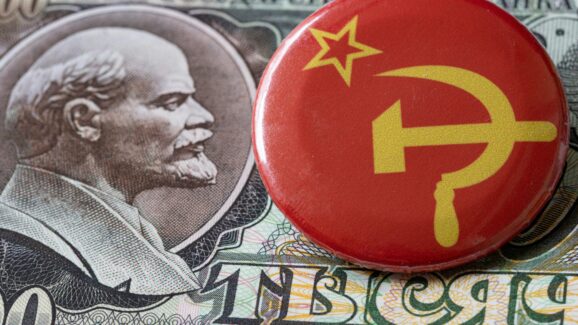
Economic Demise of the Soviet Union

What happened is surely one of the great events of modern history, an upheaval that will continue to have monumental impact on global politics and trade.

Soviet history is the vehicle for teaching fundamental skills and principles of economic reasoning, which are then used to analyze the complexities of the intertwined economic, political-legal and moral-cultural components of Soviet society.

The lessons not only explain why the Soviet economy collapsed, but also provide insights into our own economy.

Lesson Outline

Lesson 1: Opportunity Cost

  • Key Terms and Concepts: Opportunity Cost; Scarcity; Capital Goods; Choice; Consumer Goods; Communism
  • Activity:  A Journey of Choices

Lesson 2: Missing Markets and Missing Prices

Lesson 3: Incentives Matter

Lesson 4: Property Rights

  • Key Terms and Concepts: Property Rights; Private Property; Incentives; Collectivization; Profits; Tragedy of the Commons
  • Activity: What Do I Care Who Owns It?

Lesson 5: Transaction Costs – Life in a Soviet Household

Lesson 6: Applying the Lessons of the Soviet Union

Unit Conclusion

Dick Cheney said deficits don’t matter. Tell that to your 7% mortgage.

Students and teachers came together to explore economics, practice leadership, and learn from one another

From EFL to The Money Manual: How One FTE Alum Is Changing the Way Teens Learn About Money

For many teenagers, financial literacy can feel like a subject designed for someone else. Most resources are written for adults,…

A Summer of Learning and Connection

Students and teachers came together to explore economics, practice leadership, and learn from one another