
The Invisible Hand
7-8:30pm Eastern | 4-5:30pm Pacific
August 26, 2026
Discover how Adam Smith’s concept of the ‘Invisible Hand’ helps explain the power of markets, competition, and voluntary exchange through izzit.org’s engaging video lesson, paired with a unique and interactive viewing guide that promotes high-level critical thinking. Participants will also explore two classroom-ready activities: one inspired by Milton Friedman’s I, Pencil story to illustrate economic cooperation, and another that challenges students to examine why business owners make the decisions they do and how those choices can benefit society as a whole.
in partnership with izzit.org

Ultimatum Game
7-8:30pm Eastern | 4-5:30pm Pacific
September 9, 2026
In this workshop, participants experience the Ultimatum Game — a simple yet powerful simulation in which one player proposes how to split a sum of money and the other chooses to accept or reject the offer. Through this activity, participants discover that real market behavior goes beyond pure self-interest, echoing Adam Smith’s insight in The Theory of Moral Sentiments that humans are naturally guided by sympathy and a desire for mutual approval. The debrief connects the simulation to the broader argument that free markets don’t undermine moral values — they depend on them.
This workshop is open to all participants and is presented as part of Burton D. Morgan Foundation’s 2026 Speaker Series on Free Enterprise.

Property Rights and America’s Founding
7-8:30pm Eastern | 4-5:30pm Pacific
September 23, 2026
Why did Jamestown go from an 80% mortality rate to a thriving, profitable colony in just a few years — with the same people, same land, and same climate? The answer lies in one institutional change: the introduction of private property.
This workshop explores how the Founders’ understanding of natural rights and property rights shaped the American constitutional system — and how that history offers a powerful, classroom-ready lens for teaching economic reasoning alongside civics. Participants will trace the philosophical roots of property rights through John Locke’s Second Treatise of Government, unpack the economic logic embedded in the Declaration of Independence’s “life, liberty, and the pursuit of happiness,” and examine how the Fifth Amendment, Commerce Clause, and Contracts Clause work together to protect property and reduce transaction costs.

Destination Start Up
7-8:30pm Eastern | 4-5:30pm Pacific
October 21, 2026
This session will focus on institutions of economic freedom that are necessary for entrepreneurship, particularly property rights, voluntary trade and the rule of law.
Attendees will participate in a classroom activity in which they take on the role of entrepreneurs looking for a place to start their business. They work with a team to research 4 countries and choose the one that is most desirable for their start-up. After learning about the institutions of economic freedom, participants compare their rankings with the Economic Freedom of the World Index and discover that the countries most conducive to entrepreneurship are those with high levels of economic freedom.
This workshop is open to all participants and is presented as part of Burton D. Morgan Foundation’s 2026 Speaker Series on Free Enterprise.
Teaching Executive Power Through Economic Reasoning
7-8:30pm Eastern | 4-5:30pm Pacific
October 28, 2026
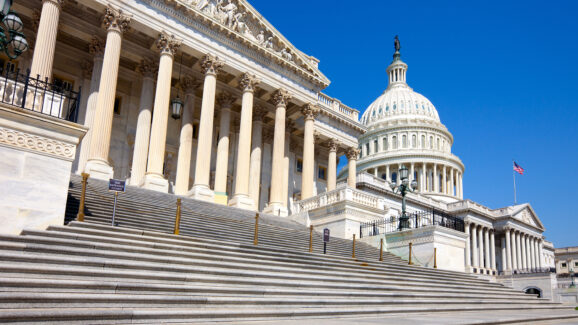
What does economics have to do with the presidency? Everything. Every executive decision involves trade-offs, costs and benefits, and incentives—which makes economic reasoning the perfect lens for understanding constitutional design. This workshop explores why the Founders created an executive branch capable of swift action while simultaneously fearing concentrated power. You’ll experience firsthand how the tension between efficiency and liberty isn’t just a civics concept—it’s an economic problem with real costs, benefits, and difficult choices that every president must navigate.