Leading with Logic, How Cadence Connected Economics to the Real World


For many high school students, economics is something found in a 900-page textbook. It is often seen as a series of abstract graphs and formulas to be memorized for a three-hour exam. For Cadence Ding, a 16-year-old student and competitive rower from Canada, that was exactly the problem.
After self-studying for her AP Micro and Macroeconomics exams, Cadence felt she had the theory down (eventually scoring a perfect 5!), but she was missing the spark. She wanted to learn about the subject in a way that felt real.
“I really wanted to learn more about economics in a way that wasn’t so textbook,” Cadence says. “I wanted to talk to people about it and see it in real-world situations.”
That search led her to the Economics for Leaders (EFL) program at Yale University. We sat down with Cadence to talk about her week on campus and how a simulation about fishing changed her perspective on the world.
Beyond the Textbook
While Cadence was aware of advanced economics tracks, she was specifically drawn to the leadership aspect of the EFL program. For her, the goal was not just more content; it was about application and growth.
“I thought, if it’s a leadership program, I can actually get experience,” she explains. “It’s easy to be a leader in a community where you already know everybody. It’s harder to go out into a new environment and be a leader.”
The Chaos of the Market
One of the highlights of the week was a fast-paced stock market simulation. In a room full of students running around, trading papers, and shouting prices, Cadence had a realization.
“It was chaos in that room, but I remember thinking that this is something I could actually enjoy. It was chaotic but really fun. Before, I thought this kind of stuff would just be stressful. FTE helped me realize that if I approach it with the right mindset, this is genuinely something I want to do.”
Real-World Connections
The program did more than make economics fun; it made it relevant. Cadence recalls a video lesson on property rights and fishing that she was able to bring up recently in her history class to explain international relations.
Whether it is understanding the price elasticity of insulin or the logic behind global tariffs, Cadence now sees economic concepts everywhere. “To have a good base knowledge of economics is to be able to understand what’s happening in the world,” she says.
Life at Yale
Attending the program at Yale also gave Cadence a taste of independence and a glimpse into her dream of attending a U.S. university to study business or social sciences. From navigating dorm life to grabbing lunch with Professor Malhaz Jibladze to discuss the impact of social media, the experience was transformative.
“The campus was beautiful and very walkable. I was texting my parents and telling them that I wanted to be there,” she says. Being there alone allowed her to interact with new roommates and gain a sense of independence that she had not experienced before.
Looking Ahead
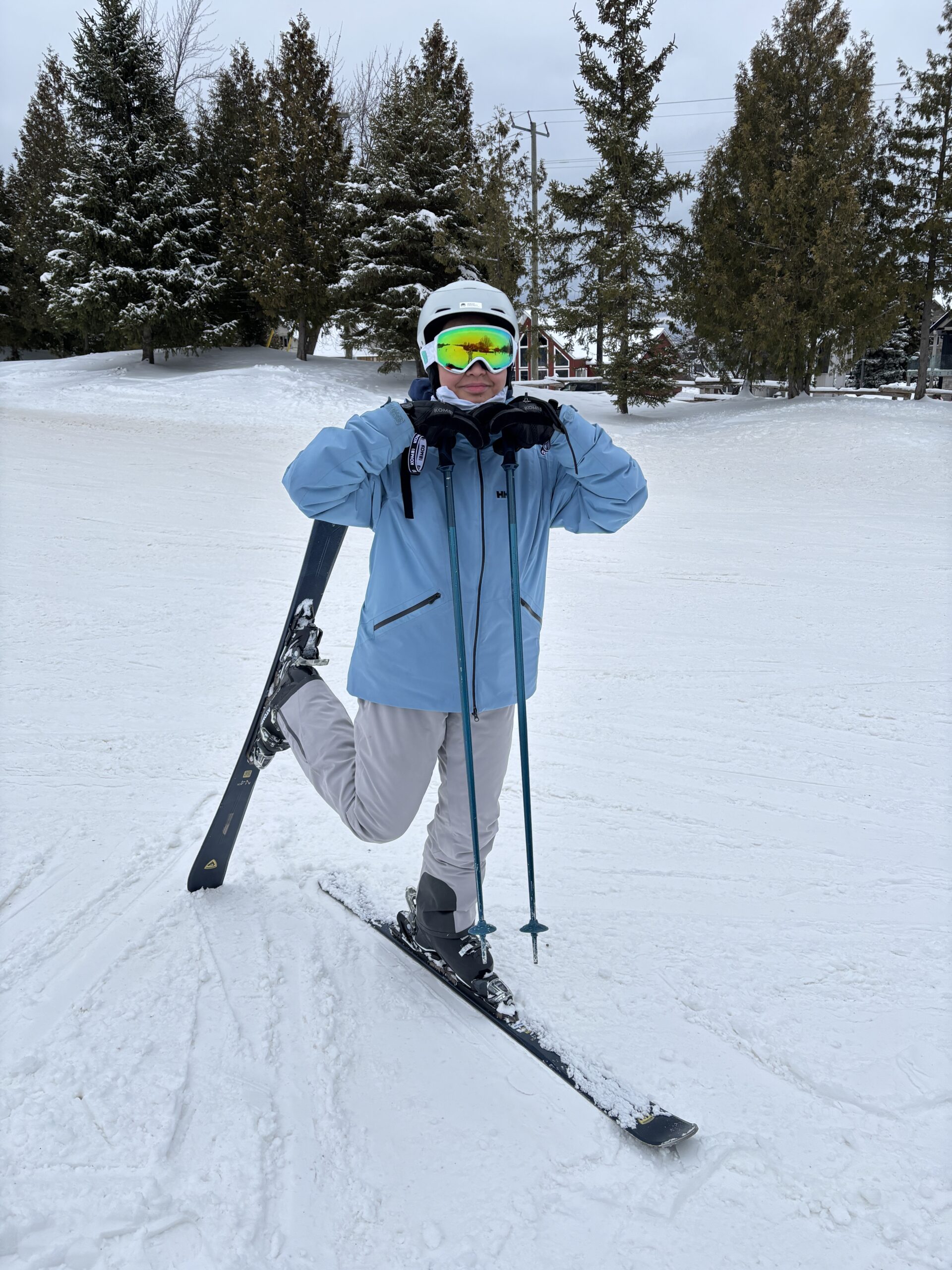
Now back in Canada, Cadence balances her high-level academics with a busy schedule of rowing and running her own ski school. She even finds time to relax with her favorite jazz playlists between business competitions. As an enthusiastic ambassador for the program, her advice to students on the fence is simple:
“It’s a fun, fast-paced program that will teach you everything you need to know about economics in life. You learn so much in just one week, you meet cool people who are actually there to learn, and the professors are amazing. It was a total turnaround point for me.”