ACTIVITY 5 – The Shortage Economy

Introduction:

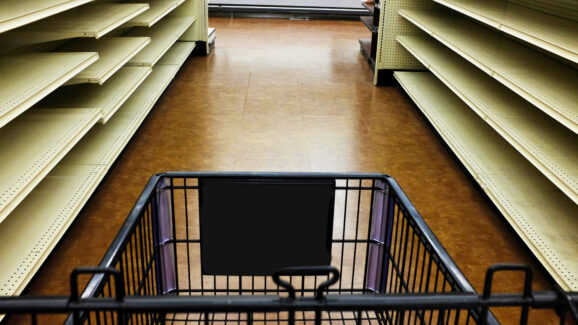
As countries like Estonia and Poland were occupied by the Soviet Union during World War II, private industry was nationalized, prices and production were controlled, and shortages ensued.  This activity allows students to participate in a market before and after the controlled prices and production. As they struggle with fulfilling their wants and needs amidst a shortage, they discover ways to alleviate the struggle by going around the law and participating in black markets.

Key Terms:

Black Market The exchange of goods and services in an illegal, uncontrolled and unregulated manner.

Incentive A factor that encourages people to do something.

Market A places, institution or technological arrangement where or by means of which goods or services are exchanged. Shortage The situation that arises when buyers want to purchase more than producers want to sell at the prevailing price.

Objectives

Students will be able to:

  • Define shortage.
  • Provide examples of black markets.
  • Explain why black markets arise.

Voluntary National Content Standards

CONTENT STANDARD 4: Incentives

People usually respond predictably to positive and negative incentives. 

  • Benchmark 1: Acting as consumers, producers, workers, savers, investors, and citizens, people respond to incentives in order to allocate their scarce resources in ways that provide them the highest possible net benefits.

CONTENT STANDARD 5: Trade

Voluntary exchange occurs only when all participating parties expect to gain. This is true for trade among individuals or organizations within a nation, and among individuals or organizations in different nations. 

  • Benchmark 1: When people buy something, they value it more than it costs them; when people sell something, they value it less than the payment they receive.

CONTENT STANDARD 7: Markets and Prices

A market exists when buyers and sellers interact. This interaction determines market prices and thereby allocates scarce goods and services. 

  • Benchmark 1:  Market outcomes depend on the resources available to buyers and sellers, and on government policies.
  • Benchmark 2:  A shortage occurs when buyers want to purchase more than producers want to sell at the prevailing price.

CONTENT STANDARD 8: Role of Prices

Prices send signals and provide incentives to buyers and sellers. When supply or demand changes, market prices adjust, affecting incentives.  

  • Benchmark 4:  Government-enforced price ceilings set below the market-clearing price and government-enforced price floors set above the market-clearing price distort price signals and incentives to producers and consumers. Price ceilings can cause persistent shortages, while price floors can cause persistent surpluses.

Time Required

45 minutes

Support Materials

Recent Blog Posts

View More

October is National Economic Education Month. We need it more than ever.

The Washington Examiner By Ted Tucker October 2, 2025 A fundamental economic principle is that voluntary trade creates wealth, and the…

FTE: Celebrating 50 Years of Excellence in Economic Education

April 23, 2025 2025 is a special year for the Foundation for Teaching Economics (FTE), as we celebrate our 50th…

The Economic Way of Thinking: The Key to Financial Literacy

April 10, 2025 Professor Jamie Wagner discusses how economics is the key to financial literacy. She is a Professor and…