Tell Our Elected Officials to Enroll in FTE Programs, Please!
January 30, 2026
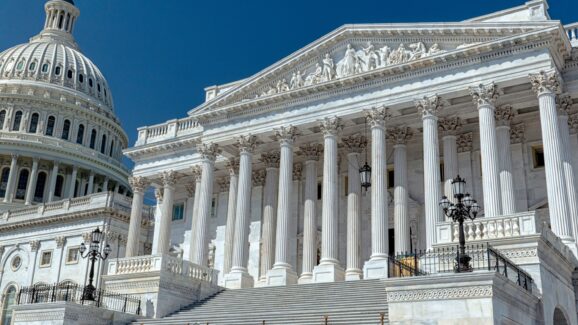
Despite last-minute negotiations late this week, President Trump and congressional leaders appear to once again be on the precipice of yet another federal government shutdown – which would be the fourth full or partial shutdown in the previous eight years. In doing so, federal leaders will have to resort to an increasingly common financial legerdemain: funding the federal government through a last-minute “continuing resolution” rather than an on-time vote before the start of the fiscal year last October.
Rather than make the hard financial choices to fund the budget on time, which could involve cutting spending for popular programs or increasing revenue through taxes, Congress is fond of punting the decision another year. In doing so, Congress often raises the federal debt ceiling in tandem with passing a continuing resolution (which it did again last July), relying on increased government borrowing to make up the difference.
This concerning phenomenon isn’t new. If Congress doesn’t get its act together, 2026 will mark 30 straight years since it last passed a fully funded budget on time. It took former President Bill Clinton declaring “the era of big government is over” after a painful midterm election for his party to deliver a full federal budget in September 1996.
Unfortunately, Clinton was wildly wrong on that score. Since his pronouncement three decades ago, the federal debt has skyrocketed from approximately $10.7 trillion in 1996 to more than $37 trillion today, alongside a similar increase in the size and scope of the federal government. In 1996, debt accounted for 66% of U.S. GDP; today, it is 124% of GDP.
There is no free lunch carrying this debt. It costs $355 billion annually just to maintain interest payments on the debt – 19% of the total federal spending in fiscal year 2026. Instead of playing politics over trivial amounts of federal spending, our leaders should tackle the debt’s real causes, including ballooning interest payments, growing entitlement programs, and other mandatory spending. They don’t reflect our nation’s concerning lack of economic literacy.
Economic literacy is the understanding of the core economic principles that govern our lives, and how to apply them to everyday economic decision-making. Every American, whether a busy parent or a Member of Congress, should possess basic economic literacy. Unfortunately, our political debates often reflect a lack of understanding of opportunity costs, tradeoffs, incentives, and other key economic concepts relevant to the federal budget.
My organization, the Foundation for Teaching Economics (FTE), works year-round to address gaps in our nation’s economic literacy. FTE hosts in-person and online programs for high school and middle school teachers, equipping them with the tools to teach economics to their students. Each year, more than 1,500 high school teachers participate in these programs, educating an estimated 175,000 students annually.
By fortuitous timing, FTE is kicking off our winter schedule with the relevant program – Making Sense of the Federal Budget, Debt & Deficit – this weekend. The seminar helps educators better teach these concepts by applying the economic way of thinking to help students understand the spending choices facing American policymakers. To get a handle on the ever-growing federal debt and stop the current shutdown/overspending cycle, we must continue to support programs like these that increase economic understanding across society and promote the economic way of thinking among America’s next generation of leaders.
Only by understanding these critical concepts can we maintain sound government policies that enable economic growth – a must-have if we’re ever to meet our growing obligations on the deficit and debt. Though FTE’s programs typically serve high school teachers and students, we’re happy to make an exception for any Member of Congress eager to attend and learn how to avoid the next budget crisis.

Ted Tucker is the Executive Director at the Foundation for Teaching Economics (FTE), a nonprofit educational organization that promotes experiential learning and the economic way of thinking.

Foundation for Teaching Economics Opens Student Application for Summer 2026
January 12, 2026 The Foundation for Teaching Economics is pleased to announce that applications for Summer 2026 student programs are…

Making Economics Meaningful for Students
December 19, 2025 The Fund for American Studies’ Liberty and Leadership podcast features FTE’s own Amanda Stiglbauer, a longtime member of our…
October is National Economic Education Month. We need it more than ever.
The Washington Examiner By Ted Tucker October 2, 2025 A fundamental economic principle is that voluntary trade creates wealth, and the…